
October 22, 2024
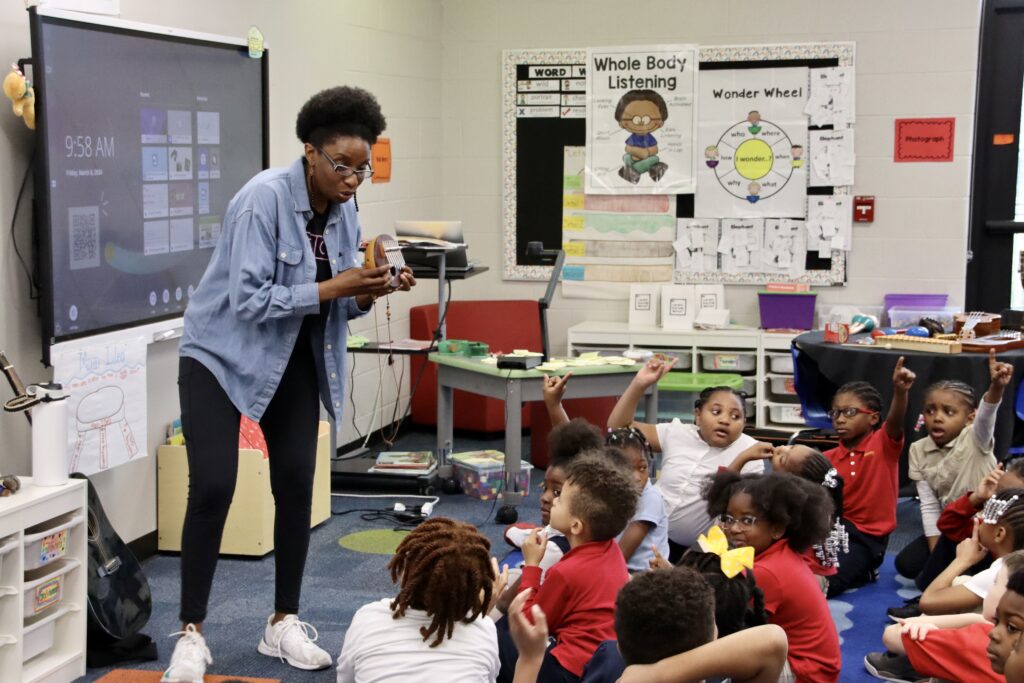
In the ever-evolving world of education, finding creative ways to engage students is more critical than ever. At City Academy, the Sheldon SOLID Project stands out as a prime example of how innovative learning can make STEAM (science, technology, engineering, arts, and math) not only accessible but also exciting for our young scholars. Last year, our 1st graders embarked on this enriching journey, designing and constructing their own musical instruments with guidance and instruction by educators from the St. Louis Science Center and The Sheldon.
The Sheldon SOLID (Science of Learning Instrument Design) Project challenged students to create a functional musical instrument from repurposed materials. The project was structured around six stages: Ask, Imagine, Plan, Create, Test, and Improve.
These stages guided students as they brainstormed, designed, and built their instruments. “The challenge was to create something that could produce sound through vibration, change pitch and volume, and be well-constructed using only recycled materials,” explained Dr. Noah Hollenkamp, City Academy’s 1st Grade STEAM teacher.
The project was not just about building an instrument; it involved understanding the science behind it. Through a partnership with the St. Louis Science Center and The Sheldon, students learned about sound waves, vibration, and the principles of music. “The Science Center provided the physical science component, teaching the kids how sound moves through air, while The Sheldon focused on the artistic side, exploring what makes an instrument and how vibration plays into it,” said Dr. Hollenkamp. City Academy was fortunate to have two amazing educators present to their first graders — Syrhea Conaway from The Sheldon and Elizabeth Walsh-Rock from the St. Louis Science Center.
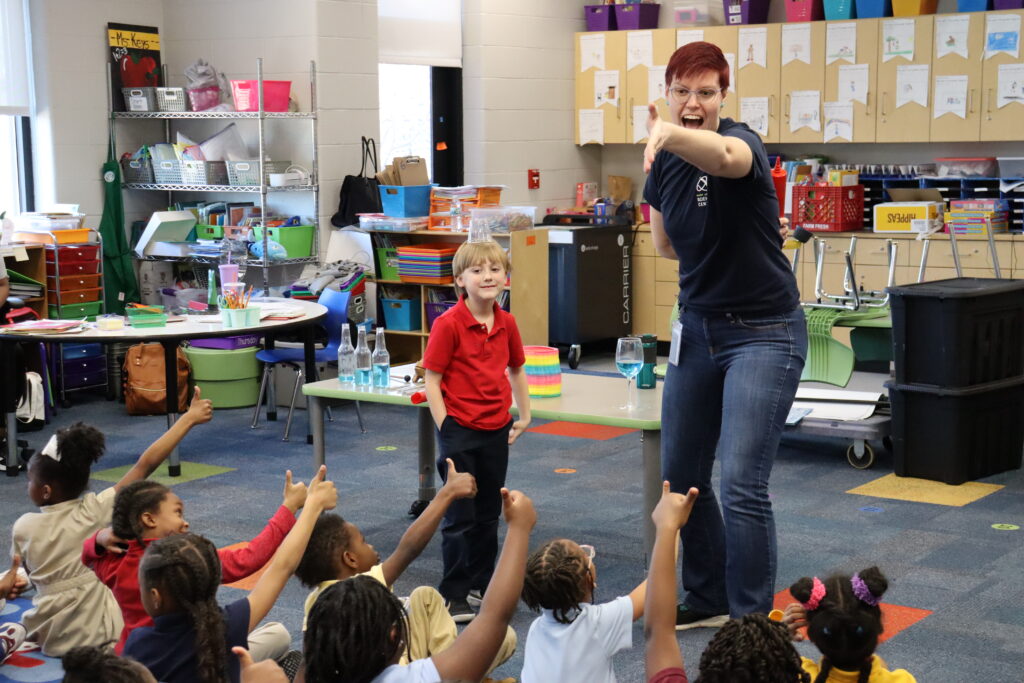
This combination of science and art created a rich learning environment where students could see the connection between these two disciplines. It also allowed them to apply what they had learned in a tangible way, culminating in the creation of their instruments.
One of the most compelling aspects of The Sheldon SOLID Project is the way it brought joy into the learning process. Dr. Hollenkamp, whose personal educational philosophy centers on the concept of joyful learning, emphasized the importance of making education fun and engaging. “There are many different ways to learn. Ninety percent of my dissertation was joyful learning and how it affects students both socially and academically,” he says.
For the 1st graders, the project was a chance to explore their creativity and learn in a way that felt like play. This approach, according to Dr. Hollenkamp, is key to keeping young students excited about school. “Essentially, I’m trying to infiltrate their minds to let them know that learning is fun — learning is joyful — so they’re not afraid of school. They’re not dreading waking up and coming to school because it was a fun day yesterday, so it stands to reason it might be fun today.”
Dr. Noah Hollenkamp
I always love bringing others in because especially in a six or seven-year-old’s head, math and science is usually only done in this room.”
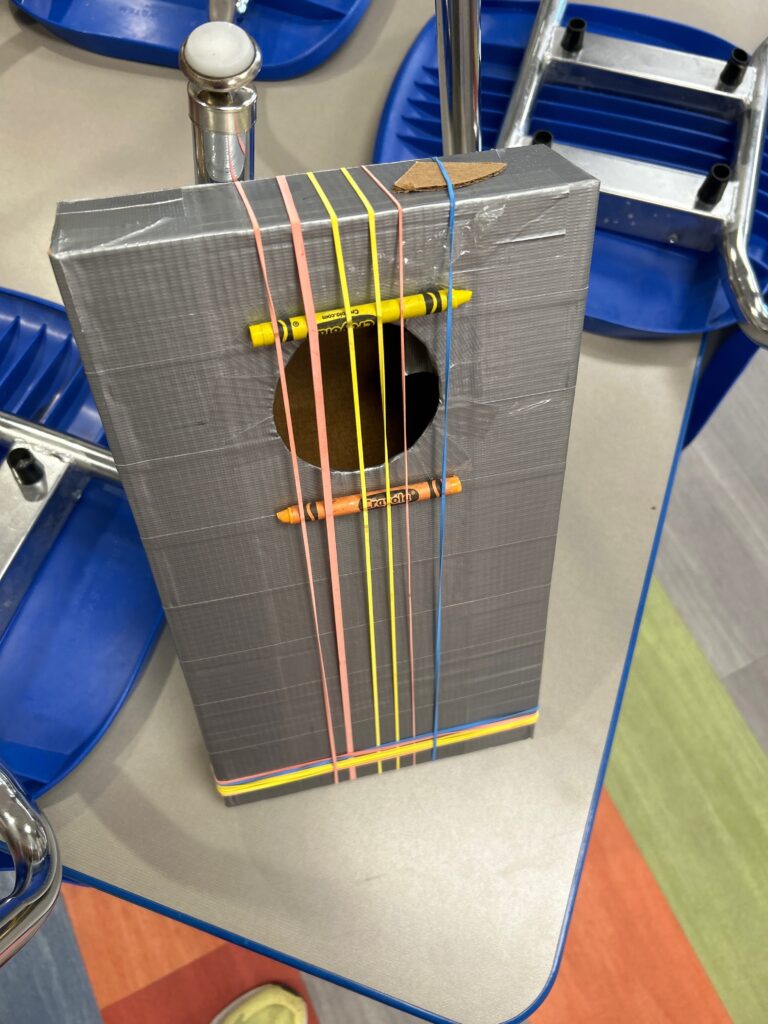
This mindset was evident in the enthusiasm with which the students approached the project. They experimented with various materials, from rubber bands to cereal boxes, and developed unique instruments that met the challenge criteria. Dr. Hollenkamp recalled how one student, Wyatt Casteel, created a ukulele-like instrument from a cereal box and rubber bands that ultimately was selected to be on display at The Sheldon.
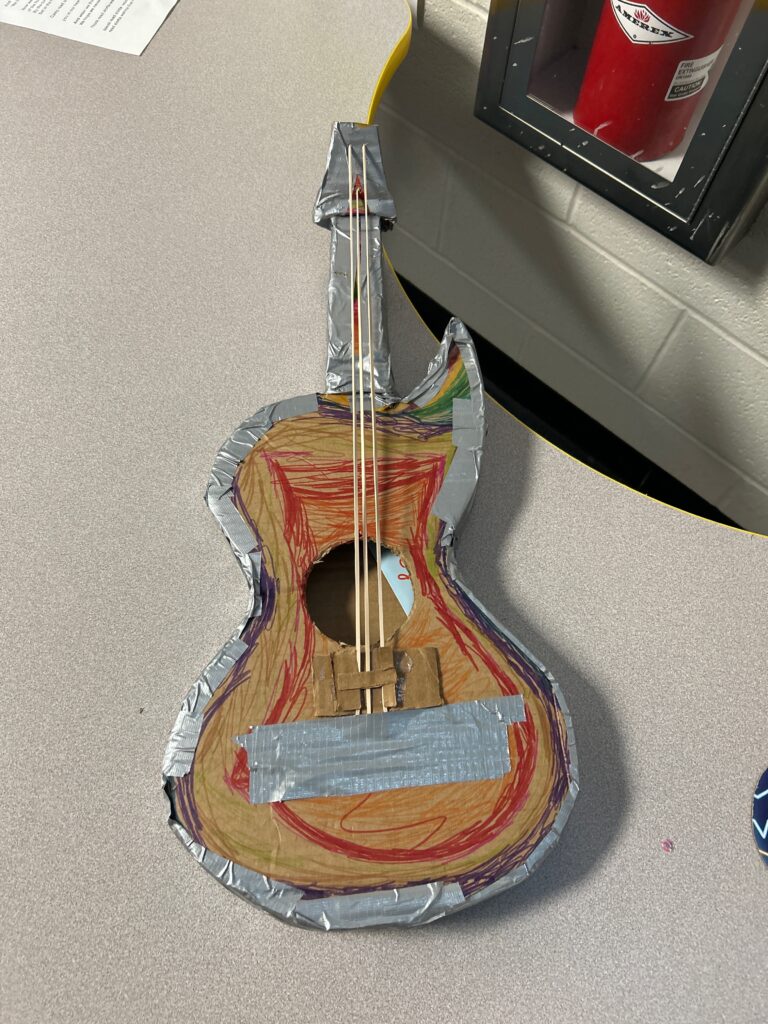
While not every student’s instrument made it to the final display at The Sheldon, the experience itself was invaluable. “The process of figuring it out was great,” Dr. Hollenkamp says. “Most kids did the rubber band guitar with the Kleenex box—things that were all recyclable. It was all about the creativity and the fun of making something work.”
The SOLID Project also allowed students to see the practical application of their classroom lessons. By connecting what they learned about sound and music to the real-world task of building an instrument, students gained a deeper understanding of the material. “They really appreciated that a musical instrument is not just hitting two sticks together. It can be, but to really advance, you have to come up with new ways of doing it,” said Dr. Hollenkamp.
The project also highlighted the importance of bringing outside expertise into the classroom. The involvement of the St. Louis Science Center and The Sheldon provided students with experiences they might not have had otherwise. “As a teacher, I’m always thinking, parents take your kids here, give them experience there. But it’s also not feasible for a six-year-old to understand that they’re truly learning something valuable in a space where they’re more focused on social or familial interactions,” Dr. Hollenkamp explained.
By bringing these experiences into the familiar environment of the classroom, students could focus on learning rather than just observing. This approach aligns with Dr. Hollenkamp’s belief that learning should be integrated into everyday activities, making it a natural part of students’ lives.
“I always love bringing others in because especially in a six or seven-year-old’s head, math and science is usually only done in this room,” Dr. Hollenkamp said. “So really to bring math and science into a place that they’re already familiar with learning I think builds on the concepts, versus kind of being just a social experiment. They know that there’s an academic component to it.”
Looking ahead, the goal is to continue to explore more opportunities like The Sheldon SOLID project. Dr. Hollenkamp has enjoyed bringing in outside educators before — like Serengeti Steve’s reptile show — and plans to bring in Math Magic soon. The school will also host a STEAM Family Night in late October with numerous exhibits and displays from local organizations and businesses.