

November 04, 2024
This past year, our 2nd graders embarked on a journey to understand the Civil Rights Movement through a project that brought history to life via the voices and stories of their own families. Coordinated by 2nd Grade Humanities Teacher Laurianne Zink, the project was more than just part of the Wit & Wisdom 2nd grade curriculum; it was a powerful exploration of the past, made personal through family connections.
Zink says the inspiration for the project came from a desire to deeply involve families in the learning process, which was a school-wide focus in social studies classes last year. “Many of our students had a limited understanding of the Civil Rights Movement, yet their grandparents, great-grandparents, and even great-great-grandparents lived it. It was their lives. It felt like such an honor to talk about this topic with the class because this isn’t my story, but I get to share it with them. I felt like it was one of the most powerful experiences I’ve had in my 23 years of teaching,” Zink says. Her goal was to make history tangible for the students by connecting what they were learning in the classroom with the lived experiences of their families.
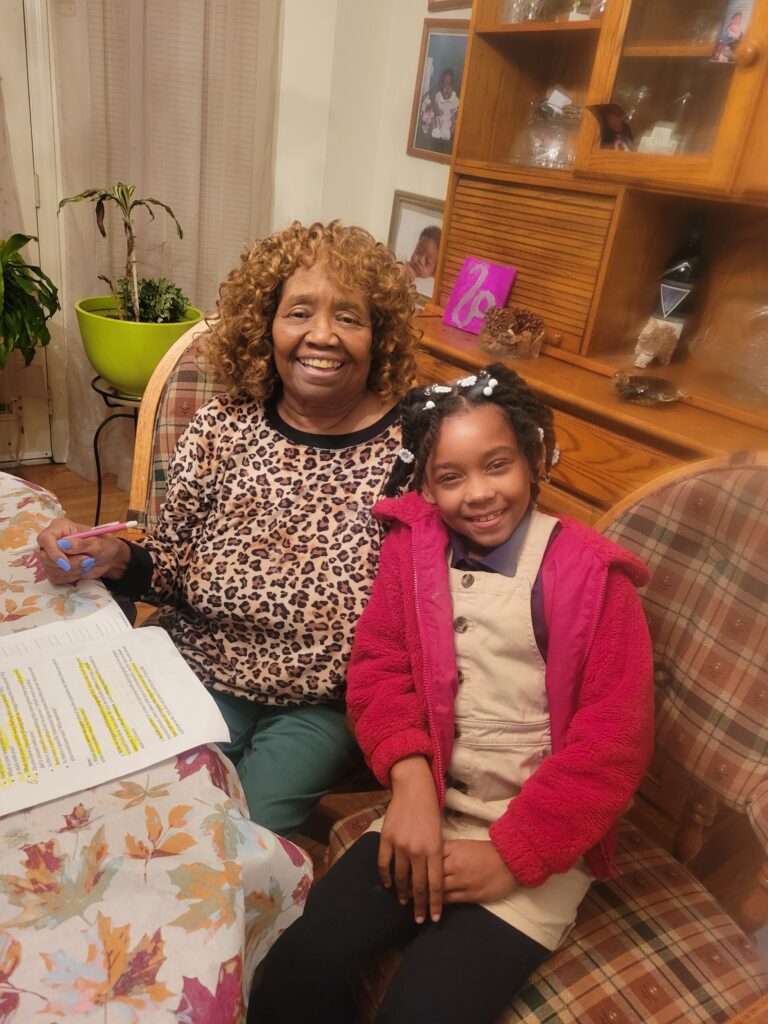
The project involved students interviewing a relative or close family friend who had either lived through the Civil Rights Movement or had memories passed down from that era. These interviews served as the foundation for an informative paragraph that each student wrote, summarizing what they had learned. “Just being able to connect what we were learning about with their families was so vitally important,” Zink says.
The project allowed students to see history in a new and personal light. One student, Camari Henry, had the opportunity to learn more about his fourth great grandfather, Frank (Teannie) Edwards who played for the St. Louis Stars in the Negro Leagues in 1936 and 1937. “My favorite part of the project was learning about how he taught other kids to play baseball,” says Camari.
Not every student had a relative they could interview. In such cases, students conducted traditional research on the Civil Rights Movement. Each student was responsible for writing a paragraph and sharing it with their classmates. Along with the paragraph, students presented a photo of the person they interviewed if they had one. Zink explains that this sharing process was a significant part of the project. “We took several days and lots of time to have each child read their paragraph and show us the picture,” she says. This process not only helped the students to connect with each other’s stories but also created a shared learning experience that extended beyond the classroom.
The project was well-received by parents and guardians. Zink recalls seeing parents taking pictures of their children’s work, which was displayed on a bulletin board. One parent even mentioned, “We’re going to send this to grandma and grandpa.” Zink says, “There’s such value in them being able to share that with us. This is a really important thing, and we’re not going to have the opportunity forever.”
The timing of the project also played a crucial role in its success, as it coincided with Black History Month. This alignment deepened the students’ learning, making the project even more relevant. As part of their curriculum, the 2nd graders read and discussed texts about Civil Rights heroes like Ruby Bridges and Dr. Martin Luther King Jr. The project also incorporated music from the era, helping students to connect emotionally with the history they were studying. Students even sang songs from the Civil Rights era, like “Ain’t Gonna Let Nobody Turn Me Around,” at a morning assembly. “We found some videos of people singing during the protests and marches, and the kids even marched around the room singing themselves,” Zink says.
“I felt like it was one of the most powerful experiences I’ve had in my 23 years of teaching.”
Laurianne Zink, 2nd Grade Humanities Teacher
Reflecting on the project, Zink hopes that it will have a lasting impact on her students as they continue their education. “It’s such a delicate line to walk when you’re trying to protect their innocence but also learn about what the world is really like,” she says. “I hope that their curiosity was really piqued as far as history goes and realizing what things have been like. I hope that it sparked that love of lifelong learning that we’re all about, and that they were able to see themselves making a difference with what we learned and taking it with them because the world is not perfect.”
The 2nd grade Civil Rights Movement project at City Academy is a shining example of how history can be made relevant and engaging for young students. By connecting them with their own family histories, the project helped them understand the significance of the Civil Rights Movement in a deeply personal way. As Zink says, “We still need these kids to be passionate about making justice happen. We still need our Martin Luther Kings and our Medgar Evers.” The success of this project will leave a lasting impression on the students, their families, and our entire school community.