March 20, 2026
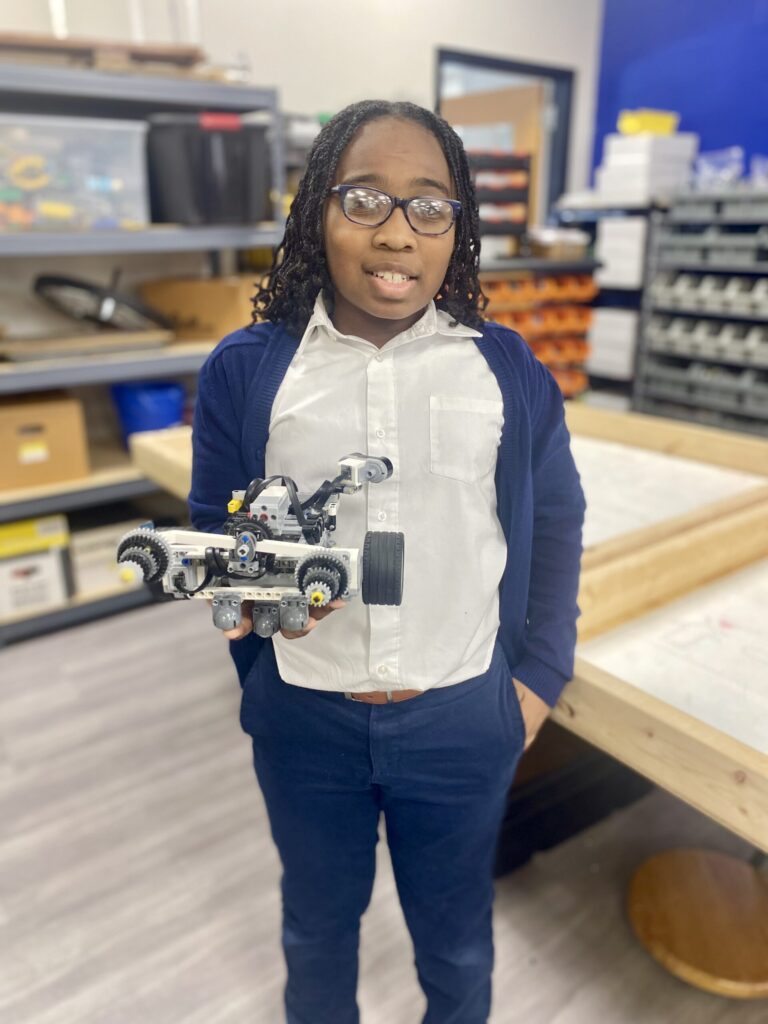
The gears begin to grind the moment 5th and 6th Grade Science Teacher Erik Taylor calls out, “Three, two, one — go!” Across two wooden arenas, each containing a black circle roughly 30 inches in diameter, a student from each team taps the start button on an iPad software program, launching a carefully programmed sequence of moves. Tires spin. Sensors activate. Mechanical hammers rise and fall. Within seconds, two custom-built LEGO robots collide in a contest that looks equal parts engineering challenge and sumo wrestling match.
Victory comes when one robot forces the other completely outside the circle. Along the way, teams can earn points by knocking loose pieces from their opponent using mechanisms such as drills, lifts, ramps, or claws. The two-person teams advance through a bracket-style tournament until a champion is crowned in each class section. Section winners face off to determine grade-level champions before the ultimate showdown between fifth and sixth grade.
It is loud, fast-paced, and undeniably fun. But beneath the spectacle is months of disciplined learning rooted in physics, engineering, and problem-solving.
The Battle Bots unit traces its origins to robotics kits that were initially purchased for an afterschool club before donors helped expand the program into the classroom. Taylor later integrated robotics into the physics unit, asking a guiding question: How do we make it fun?
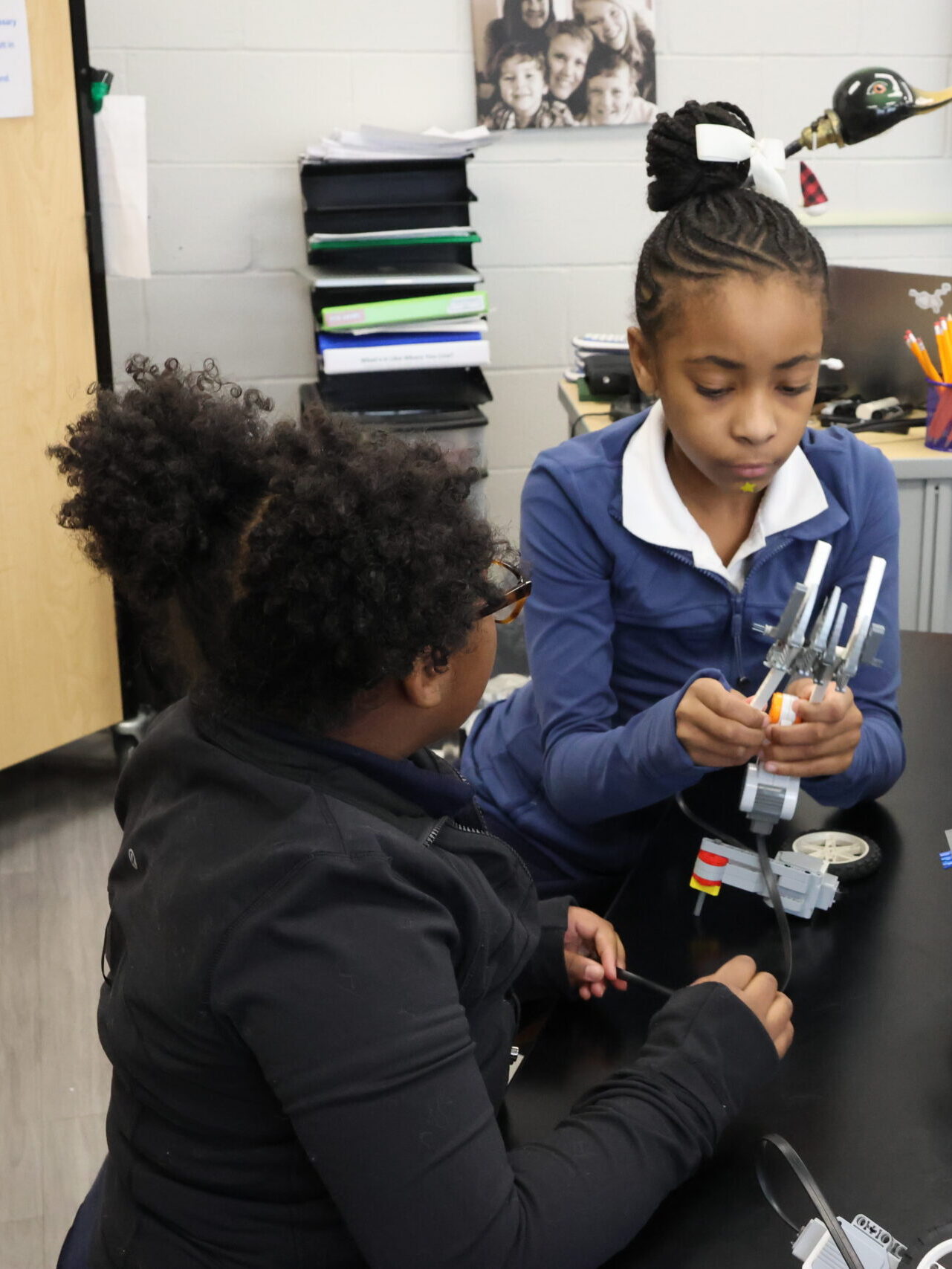
The answer became Battle Bots — an opportunity for students to apply concepts such as levers, wedges, friction, and force in a hands-on environment. Preparation begins months before the tournament. Students design and build a chassis, test it, dismantle it, and rebuild again. They experiment with mechanisms and sensors. They refine programs. And they repeat the cycle.
“What’s great about this is it isn’t soft problem solving,” Taylor says. “You bring your robot to the table. Does it do what it needs to do? And if it doesn’t, what do you need to fix?”
The project emphasizes measurable outcomes rather than guesswork. Students quickly learn that failure is part of the process — and often the best teacher.
“A lot of projects are one and done,” Taylor says. “This one you get to fail and you get to change things and test it over and over.”
Notably, Taylor guides students through foundational engineering labs but steps back once the build phase begins. “I don’t help them,” he explains. “I’ll provide you the materials that you need — you’re the one building.”
Instead, students research schematics, debate ideas, and reach consensus with their partners. When disagreements arise, data settles the argument. “Why don’t you both build this component and test to see which one does the best?” Taylor tells them.
The approach removes ego from the equation and reinforces a simple truth: “What serves the robot and what serves the final purpose of our robot being victorious?”
Fifth grader Jayce Barnett has experienced that process firsthand. “In order to make your robot actually drive, you have to build a program,” he explains. “Then you have to test it to make sure it actually does it right.”
For Jayce and his teammate, iteration led to a breakthrough. “We were able to make our robot sturdier and then add a better mechanism because the hammer just wasn’t working so we built a spinning drill.”
Students also discover that engineering success depends on collaboration, which Jayce admits was initially his team’s biggest obstacle. “The hardest challenge was our communication,” he says. But once they began testing ideas together, “that’s when it became easier.”
These lessons extend beyond robotics. Jayce already sees connections to his future. “Yes, of course, because I want to be an architect or an engineer when I grow up,” he says. “So robotics might be able to help me with planning those types of things.”
The competitions themselves take place on two custom-built tables — another example of the City Academy community in action. When an aging robotics table began falling apart, alumnus Quinten Ford ‘18 stepped forward to build new ones as his Eagle Scout project. “He’s now studying engineering [at the University of Louisville] and one of the things that inspired him was this robotics project,” Taylor says. “And so he gave back.”
The addition allows classes to run simultaneous matches, reducing wait times and expanding opportunities for testing and competition.
Moments of discovery happen throughout the unit, but Taylor points to one in particular: when students learn to pair sensors with their mechanisms. “Using the sensors was this big ‘aha’ moment for a number of students,” he says, noting how refining programs helps robots activate mechanisms at precisely the right time.
Experiences like these are possible because of generosity — from the original robotics kits that launched the program to the handmade tables that sustain it today. What began as a club has grown into a defining academic experience, equipping students with technical skills, resilience, and confidence.
Inside the arena, the battles may last only seconds. But the lessons — critical thinking, teamwork, persistence, and innovation — will serve City Academy students for years to come.